Card Counting in Theory and Practice: The Mathematical Edge and Discipline Behind the Strategy

Card Counting in Theory and Practice: The Mathematical Edge and Discipline Behind the Strategy
Card counting is one of the most legendary concepts in the world of casino gaming. For many Americans, it conjures images of sharp-minded players beating the house with pure intellect, as seen in Hollywood films. In reality, card counting is neither magic nor cheating—it’s a mathematical technique that demands discipline, focus, and a deep understanding of probability. Let’s take a closer look at how the strategy works and why it only pays off for those who master both theory and self-control.
What Is Card Counting?
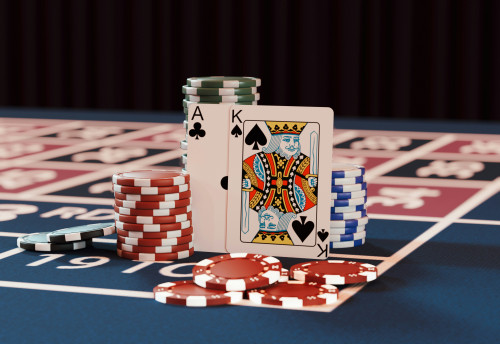
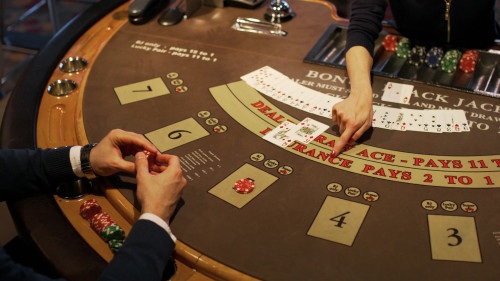
Card counting is a method used in blackjack to estimate whether the remaining cards in the shoe favor the player or the dealer. The idea is simple: high cards (10s, face cards, and aces) benefit the player, while low cards (2–6) favor the dealer. By keeping track of which cards have been played, a player can adjust their bets and playing decisions accordingly.
This doesn’t mean a counter can predict the next card. Instead, they can estimate the likelihood of certain cards being left in the deck. That probability is what gives a skilled counter a small but real mathematical edge over the house.
The Mathematical Logic Behind It
In a standard blackjack game, the house has a built-in advantage—usually around 0.5%—if the player follows basic strategy. Card counting can flip that edge, but only slightly. A proficient counter might gain an advantage of 0.5% to 1.5% over time, depending on the game’s rules and the number of decks in play.
The most widely used system is the Hi-Lo count, where each card is assigned a value: low cards are +1, high cards are -1, and middle cards (7–9) are 0. As the cards are dealt, the player keeps a running total. This total is then adjusted for the number of decks remaining to produce the “true count.” The true count determines whether the player should bet more or less on the next hand.
Discipline and Mental Strength
While the theory behind card counting is straightforward, applying it in a real casino is anything but easy. It’s not just about counting quickly—it’s about staying calm in a noisy, high-pressure environment, managing swings in wins and losses, and avoiding detection.
Professional counters train for hours to keep track of the count without moving their lips, changing facial expressions, or showing signs of concentration. They must appear casual even when increasing their bets dramatically, and they must accept that even the best strategy can lead to short-term losses.
Card counting, in practice, is as much a mental discipline as it is a mathematical one.
Myths and Realities
A common misconception is that card counting is illegal. It’s not—at least not under U.S. law—so long as you rely solely on your memory and mental calculations. However, casinos are private businesses, and they have the right to refuse service to anyone they suspect of counting cards.
To protect their edge, casinos have developed countermeasures: using multiple decks, shuffling more frequently, and employing automatic shuffling machines that make counting nearly impossible. As a result, card counting today is rarely a path to quick riches. Instead, it’s an intellectual challenge for those who appreciate the mathematics of the game.
Læs også:


Card Counting as a Lesson in Probability
Even though card counting is no longer a practical way to make a living, it remains a valuable educational tool. It demonstrates how probability, statistics, and psychology intersect in real-world decision-making. Many who study card counting apply its principles elsewhere—in investing, risk management, and strategic thinking under uncertainty.
Card counting teaches that small advantages, when applied consistently and with discipline, can compound into meaningful results over time. That lesson extends far beyond the blackjack table.
A Strategy for the Few—but a Fascination for the Many
Card counting isn’t for everyone. It requires patience, training, and near-stoic composure. Yet the fascination endures because it represents the dream of outsmarting the system through intellect alone. In truth, it’s not about cheating—it’s about understanding the mathematical structure of the game and using that knowledge to your advantage, one card at a time.
Læs også: